
Extending the DMT Experience

“DMT is the most powerful hallucinogen there is. If it gets stronger than that I don't want to know about it.” - Terence McKenna
There are few things stranger than DMT.
N,N-Dimethyltryptamine, or DMT, is a serotonergic psychedelic compound that produces an extremely powerful and short-lived experience. The experience itself is entirely immersive, plunging willing psychonauts into what seems to be another world replete with ineffable sights, hyper-dimensional geometry, and what appear to be sentient presences, or ‘entities.’ People frequently come away from a DMT experience fundamentally changed, often with new outlooks on the nature of reality and consciousness.
One participant in the seminal DMT trials conducted by Strassman in 1994 reported:
“There is nothing that can prepare you for this. There is a sound, a bzzzz. It started off and got louder and louder and faster and faster. I was coming on and coming on and then POW! There was a space station below me and to my right. There were at least two presences, one on either side of me, guiding me to a platform. I was also aware of many entities inside the space station—automatons, android-like creatures that looked like a cross between crash dummies and the Empire troops from Star Wars, except that they were living beings, not robots. They seemed to have checkerboard patterns on parts of their bodies, especially their upper arms. They were doing some kind of routine technological work and paid no attention to me. In a state of overwhelmed confusion, I opened my eyes.” - Lucas, a participant (Strassman, 2001)
On the 28th of October, a team of researchers at Imperial College London led by Lisa Luan and Chris Timmermann published a paper titled ‘Psychological and physiological effects of extended DMT’ to the Journal of Psychopharmacology. This comes just months after a similar study investigated intravenous DMT infusion out of University Hospital Basel in Switzerland. The idea of extending the DMT experience reliably and safely had, until this year, remained largely hypothetical. Now, the methodology has been validated and a new frontier has been established in the field of psychedelic science.
Why should we even bother extending the DMT state?
When inhaled, a DMT trip lasts no longer than 5 to 10 minutes – hardly long enough to get acclimated to the foreign landscape that is the DMT world. A single bolus injection of DMT will typically lead to an experience no longer than 20 minutes. The subjective effects rapidly overhaul the perceptual system, often causing significant anxiety in those who are less-experienced with the drug. Paired with this anxiety are astonishingly complex visuals that can easily distract one from any meaningful lessons or insights that might be arising. A glaring therapeutic weakness with DMT is that it can simply hurl too much at you too quickly, and before you have a clue what’s happening, you’re back on Earth.
“There’s this whole different world with architecture and landscape. I saw one or two beings there. The beings even have gender. The skin was not flesh-colored. I communicated with them but there wasn’t enough time. I was so strung out, excited, agitated when I arrived there. They wanted to try and reduce my anxiety so we could relate.” - Carlos, a participant (Strassman, 2001)
DMT possesses several pharmacokinetic qualities that lend itself to the IV infusion model. Its onset is rapid, it’s metabolized almost immediately by the enzyme monoamine oxidase (MAO), and it doesn’t produce any physiological tolerance, so it can be repeatedly given to a subject with no diminishing returns. It also has a favorable side effect profile. These properties, found by Strassman et al. in 1996, are what prompted neurobiologist Andrew Gallimore to create a proof-of-principle model for extended DMT infusion, which Gallimore refers to as DMTx. You can read more about the history of DMTx on his substack:

The DMTx model borrows the same technology used to maintain stable brain concentrations of anesthetics during surgery. Instead of one single bolus injection of DMT, the blood stream is slowly saturated with DMT by a programmable infusion machine at a variable rate. The extended duration, coupled with the programmable infusion rates will allow researchers to examine the psychological contents of the DMT state more carefully and conduct more extensive functional neuroimaging than previously possible.
Although this is the first extended-state DMT study, the idea had been put into practice first by the infamous Gordon Todd Skinner, who was closely involved with LSD manufacturing legend William Leonard Pickard. He referred to this practice as “time-surfing”. If Skinner, previously convicted of kidnapping a young man and injecting him with psychedelics for 6 days straight, was our first emissary to the DMT entities, we may have some public relations work to do in there.
Skinner’s extended trips were said to have lasted 1 to 5 hours. The Imperial College London study stopped infusion after 30 minutes, and the acute subjective effects lasted around 40 to 45 minutes. In theory, there is no limit to how long a DMTx trip can last.
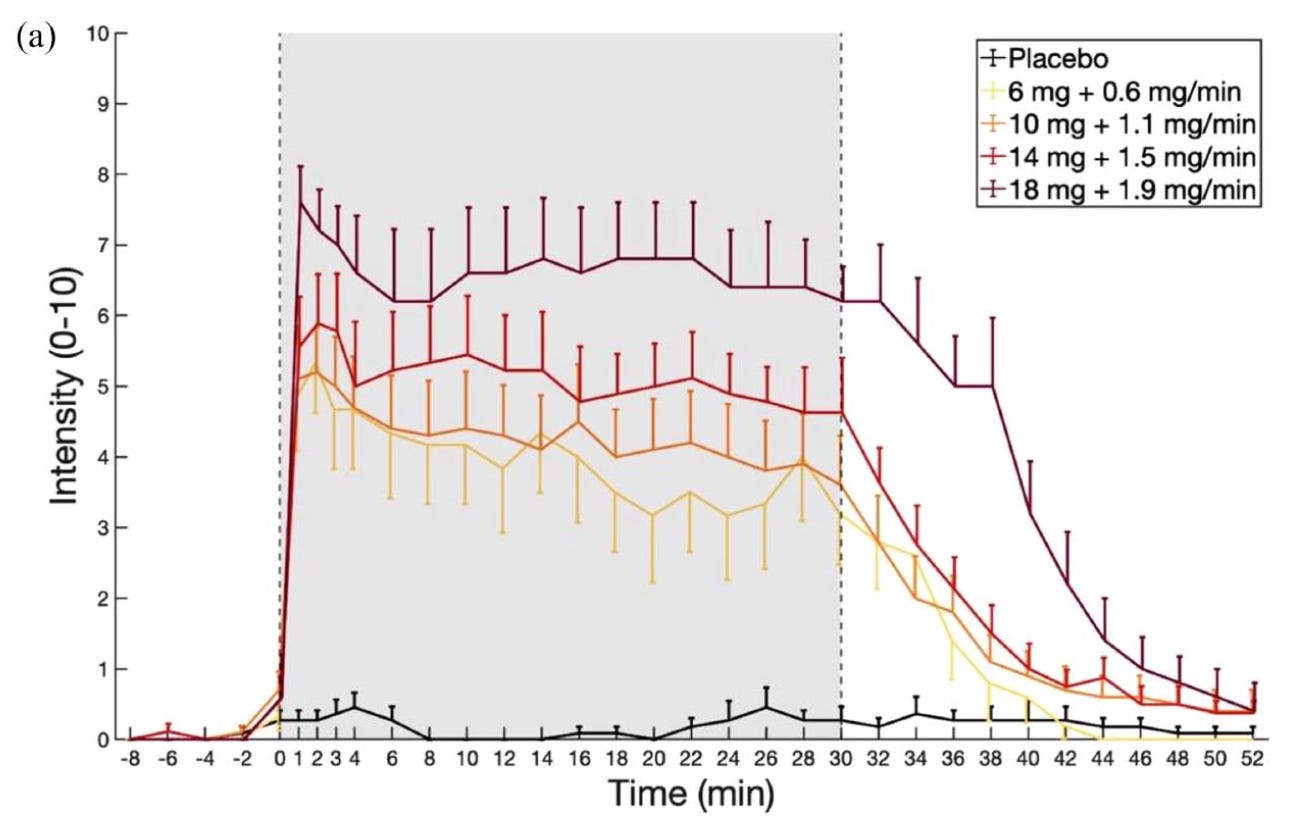
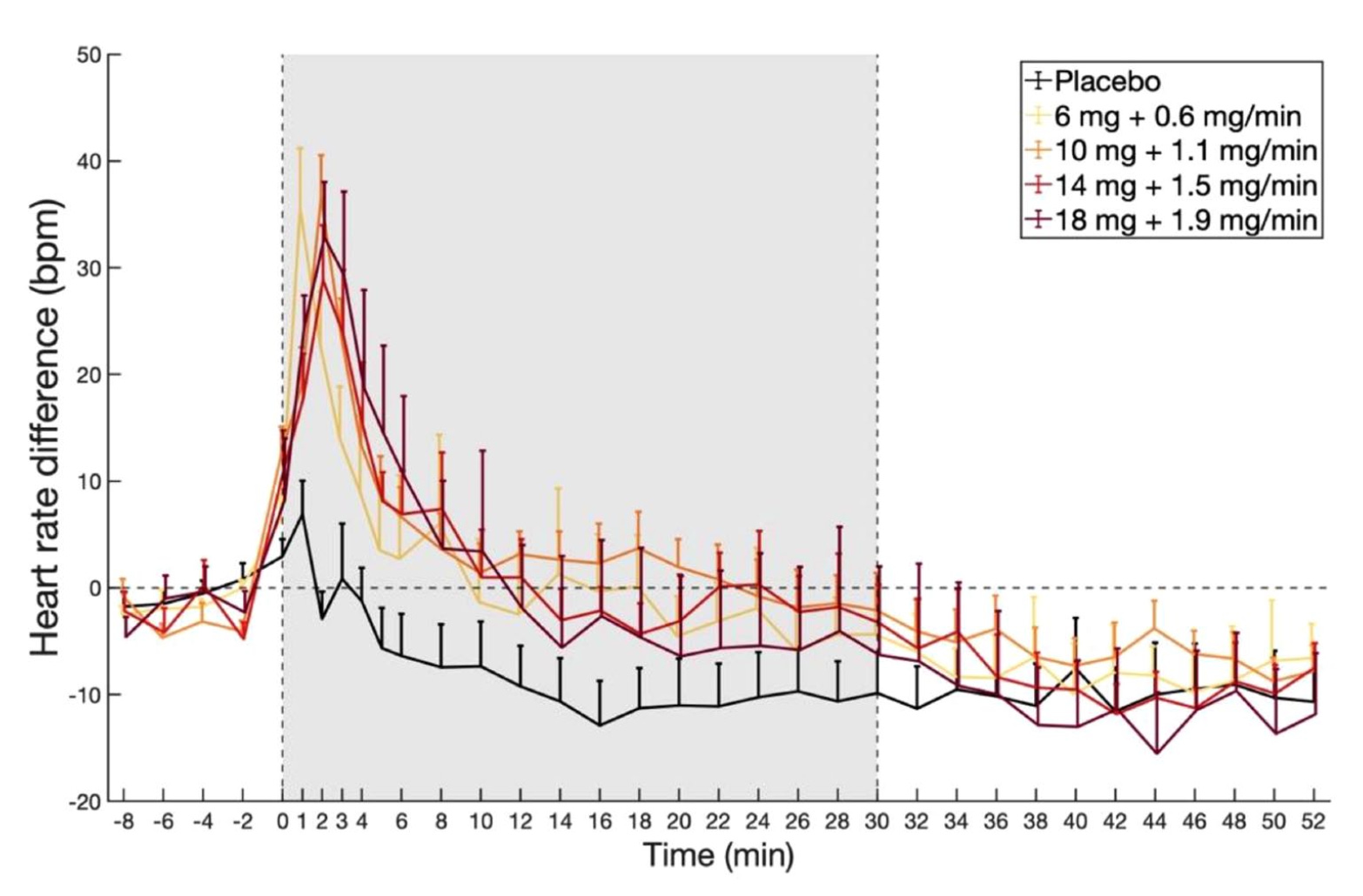
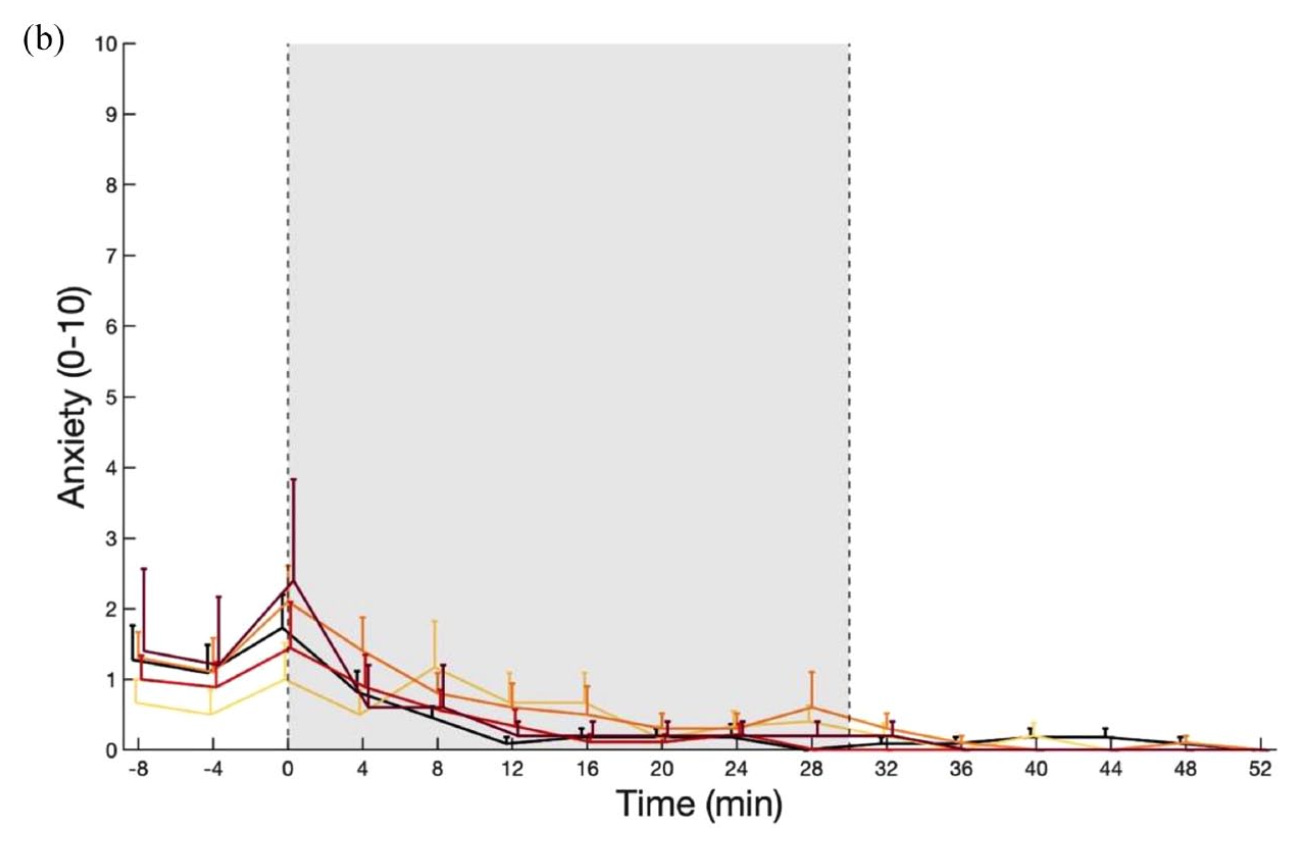
If DMT could ever be considered to be a viable therapeutic treatment, its short duration would be what holds it back. But this has changed. With an IV-infusion approach to DMT administration, people will be offered a chance to situate themselves far more comfortably within the experience than previously possible. The sublime will become regular, the entities familiar, and the initial rush of anxiety will soften into a sense of curiosity and calm. Luan et al. found exactly this – anxiety and heart rate would peak in the first few minutes, and after 10 to 15 minutes, participants felt comfortable and their heart rates went down.
DMT is unique in many ways, but one peculiarity is that it doesn’t alter the quality of your thinking mind. People report being surprisingly lucid while on DMT, as if they’re not on a drug at all but have instead been instantly teleported into hyperspace. You’re no more compassionate, no more euphoric, and no less in control of your mind than you are right now. Thus, the prospect of carefully investigating the phenomenology of the DMT experience through extended-state DMT not only holds promise for understanding altered states but also suggests potential value in therapeutic settings.
“It’s not like some kind of drug. It’s more like an experience of a new technology than a drug. You can choose to attend to this or not. You return not to where you left off, but to where things have gone since you left. It’s not a hallucination, but an observation. When I’m there, I’m not intoxicated. I’m lucid and sober.” - Jeremiah, a participant (Strassman, 2001)
The purpose of Luan et al.’s study was to test the extended-state infusion method, to gather physiological and pharmacokinetic data, and to gather data about the subjective experience of participants. After the trials, participants retrospectively took the altered states of consciousness (ASC) scale and Mystical Effects Questionnaire (MEQ-30). At certain points in time during each trial, participants were asked to rate from 1 to 10 the following: ‘Intensity’, ‘Immersion’, ‘Visual imagery’, ‘Ego dissolution’, ‘Entity encounters’, and ‘Anxiety.’ All measures besides anxiety and ego dissolution tended to increase with each increasing dose.
Although not included in the paper, the stories from the participants are as weird and fascinating as you might expect. Oddly enough, but perhaps unsurprisingly, there were some spill-over effects. One participant, Carl Hayden Smith, reported that during one trip he was shown a scenario that he ended up living out 6 months later. He also reported that outside of the lab, he felt he had an increased ability in telepathy. Two participants, Alexander Beiner and Anton Bilton, both reported experiencing intense and frequent synchronicities during and after the trial period. If you’d like to hear more from the participants, you can watch this panel discussion: https://www.youtube.com/live/Myq_Hc_39aI?si=0xfTaF9hc0xmGauj
Alexander Beiner went on to write a book that documents his experience as a participant, interspersed with cultural commentary, wild DMT stories, and lessons learned while in the DMT world. The book is called ‘The Bigger Picture: How Psychedelics Can Help Us Make Sense of the World.” During one of his infusions, he encountered a planet-sized spider that taught him about love and vulnerability. You can also check out his presentation here: https://www.youtube.com/watch?v=--bw1PHSkKM
Where is this research going? Where can it take us? As a therapeutic, extended-state DMT clearly has potential; in a highly controlled manner, a psychedelic experience could be tailored to a patient’s specific needs and to the constraints of the session. But it also offers us a chance to examine altered states of consciousness with a significant level of clarity. Stanislav Grof has said that “psychedelics are to the study of the mind what the microscope is to biology and the telescope is to astronomy.” Building on this idea, it could be that extended-state DMT is to psychedelic research what the particle accelerator is to particle physics.
“I went directly into deep space. They knew I was coming back and they were ready for me. They told me there were many things they could share with us when we learn how to make more extended contact.” - Sara, a participant (Strassman, 2001)
by John Prescott
 | A guest post by
|